Soft Drinking: Designing for Mindful Alcohol Consumption
A multi-modal iOS app combining breathalyzer feedback with AI conversation for real-time support

The Problem
Most digital tools for reducing alcohol use take an all-or-nothing approach, focusing on complete abstinence rather than controlled drinking. This leaves out "sober curious" individuals—people who want to drink more mindfully without quitting entirely.
Existing solutions rely heavily on manual self-reporting after drinking episodes, missing the critical moment when someone needs support to make a conscious decision. For LGBTQ+ populations, who experience higher rates of alcohol use linked to minority stress, there's a need for inclusive, judgment-free tools that account for diverse gender identities and don't assume biological sex equals gender.
The Solution
I designed Soft Drinking, a multi-modal iOS app that combines a portable breathalyzer with an AI-powered conversational interface to provide real-time blood alcohol concentration (BAC) feedback. Unlike traditional sobriety apps that count days since last drink, Soft Drinking tracks BAC trends over time through interactive graphs (day/week/month views) and offers in-the-moment support through a chat buddy.
The design prioritizes inclusive onboarding with gender-neutral options, opt-in data sharing for privacy, and supportive rather than punitive messaging.
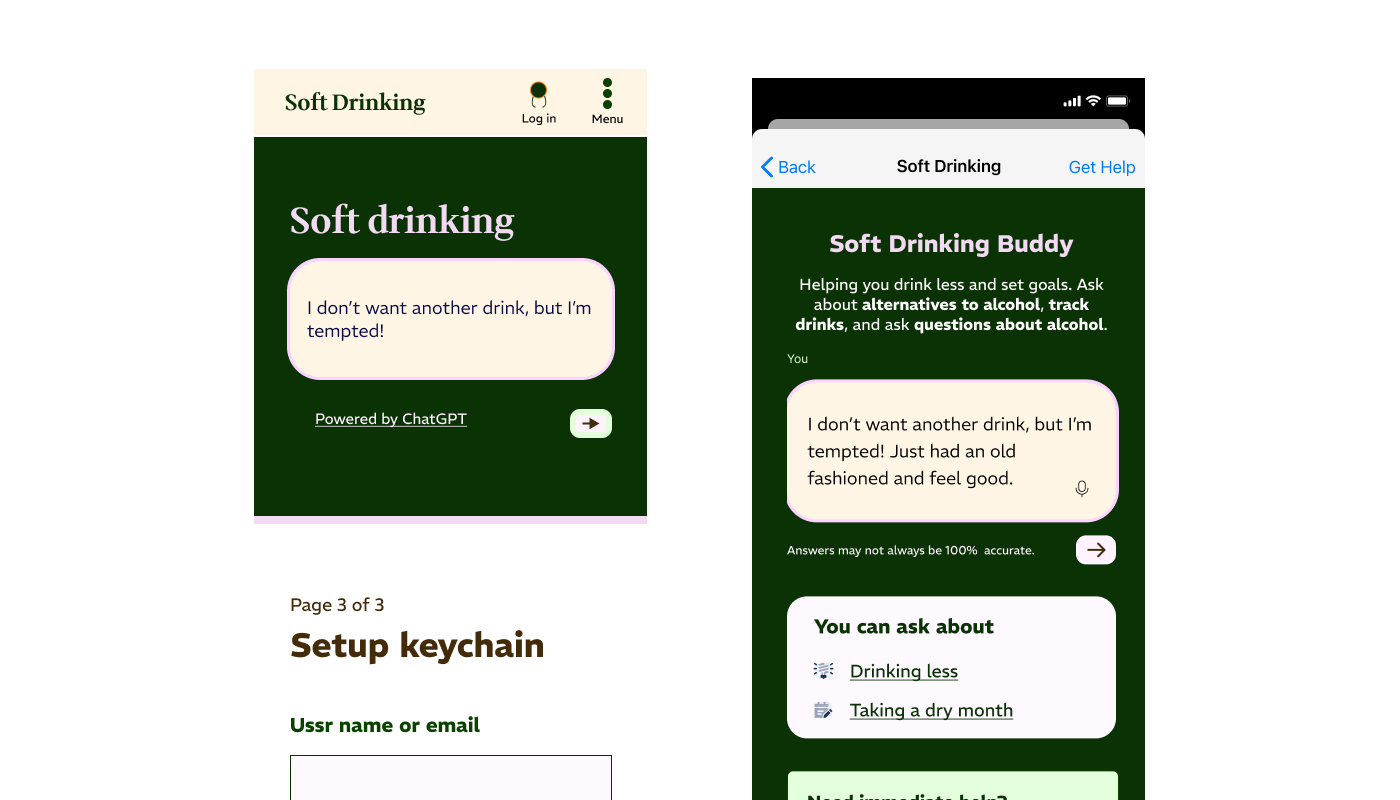
Chat interface evolution: from generic feedback to context-aware support
My Role & Impact
Conducted the full research and design process:
- literature review of neurobiology and minority stress theory
- Heuristic analysis of 8+ competitor applications
- Surveys with 192+ participants
- Structured interviews with 9 users including LGBTQ+ individuals.
Key findings revealed that bisexual and lesbian participants expressed 10% less trust in AI tools with personal information, informing my privacy-first approach with clear opt-in/opt-out controls. The final prototype addresses a gap in the market for controlled drinking tools while centering inclusivity—from gender identity options to blood alcohol calculations that don't conflate sex with gender.
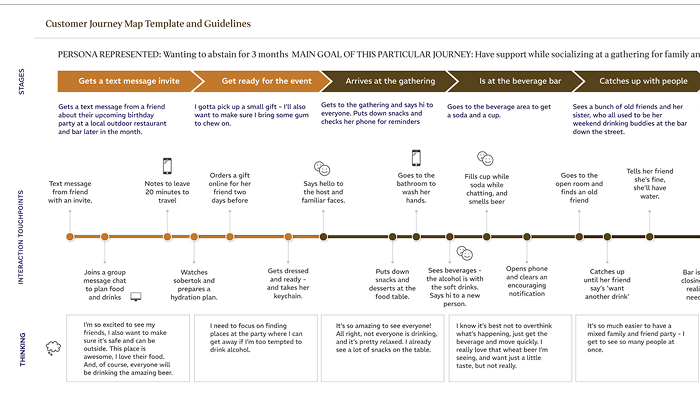
User journey mapping across emotional states, touchpoints, and opportunities for intervention
Research Approach
Literature Review
Examined neurobiology of alcohol consumption and existing digital health interventions to establish evidence-based design principles.
Competitive Analysis
Conducted heuristic review of 8+ apps including Reframe, Quit Drinking, and I Am Sober, identifying gaps in controlled drinking support.
Quantitative Survey
Surveyed 192 participants with word-sorting exercises to understand trust levels with AI tools and emotional responses to different messaging tones.
Usability Testing
Conducted two rounds of moderated interviews—3 participants for concept validation, then 7 participants for detailed prototype testing.
Key Design Decisions
Privacy-First Architecture
Based on user concerns about sharing sensitive health data, I designed a closed system by default with explicit opt-in controls for connecting to external services like Apple Health. All BAC readings remain on-device unless users choose to share with healthcare providers.
Inclusive Gender Identity
Traditional BAC calculators rely solely on biological sex. I designed onboarding that separates gender identity from biometric calculations, with options for "prefer not to say" and explanatory content about why the app collects this data.
Supportive, Not Punitive
Instead of shame-based messaging, the interface uses encouraging language like "hydrate and minimize risky drinking" at elevated BAC levels. Color coding (green/yellow/red) provides clear visual feedback without judgment.
Flexible Goal Setting
Users can set goals for controlled drinking (reducing weekly consumption) or temporary abstinence (Dry January), addressing feedback that rigid sobriety metrics don't fit everyone's journey.
Outcomes
- Identified Market Gap: Research confirmed that 50% of people seeking alcohol interventions drop out of abstinence-only programs, validating need for controlled drinking tools
- Inclusive Design Framework: Created replicable approach for collecting biometric data that doesn't conflate biological sex with gender identity
- Privacy Guidelines: Established opt-in data sharing model that addresses heightened privacy concerns among LGBTQ+ users
- Prototype Validation: 7 of 7 usability testing participants confirmed the interface was clear, non-judgmental, and filled an unmet need
Reflection
This project deepened my understanding of designing for populations who aren't often central to research about alcohol use. By centering LGBTQ+ experiences — particularly bisexual and lesbian users who showed lower trust in AI tools with sensitive data — I created a more inclusive solution that benefits all users through enhanced privacy controls and flexible goal-setting.
If I continued this work, I'd explore integration with wearables like smartwatches for passive BAC tracking via sweat sensors, and conduct longitudinal studies to understand how users' relationships with the app evolve over 6-12 months of use.